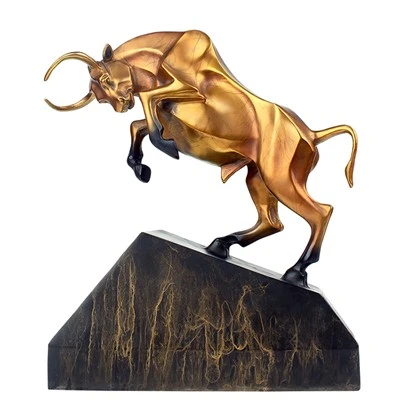
Industry standards for bronze statues primarily address material selection, manufacturing techniques, and the quality of the finished product. Production typically requires the use of compliant copper alloys, with the specific alloy composition selected based on the statue's form and intended use. During casting, parameters such as melting temperature, the pouring process, and cooling rates must be controlled to minimize defects like porosity, cracks, and inclusions. For large-scale bronze statues, considerations regarding internal structure, wall thickness, and overall weight are essential to ensure sufficient stability and load-bearing capacity upon completion.
Bronze statues must maintain structural integrity, with human proportions and forms adhering to design specifications; surfaces should be free from obvious cracks, deformations, or defects. Post-casting processes-such as grinding, finishing, welding, and surface treatment-are generally required to refine details like facial features, drapery, and decorative elements. Surface color and texture are also treated according to design requirements, utilizing methods such as chemical patination or oxidation to achieve specific hues. For antique-style bronze statues, particular attention is paid to the natural appearance of the surface color and overall aesthetic harmony.
Safety is a critical quality requirement for large statues or those intended for public spaces. Beyond the material and casting quality of the statue itself, the base, connection points, and internal support structures must be inspected to ensure stability after installation. Depending on their purpose and location, bronze statues may also need to comply with specific standards regarding product quality, installation, public safety, and engineering acceptance. Consequently, the manufacturing process must balance artistic impact with material performance, production techniques, structural safety, and installation quality.