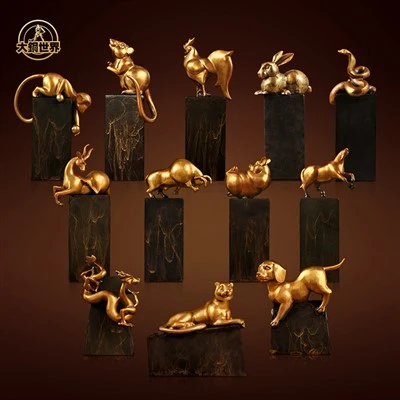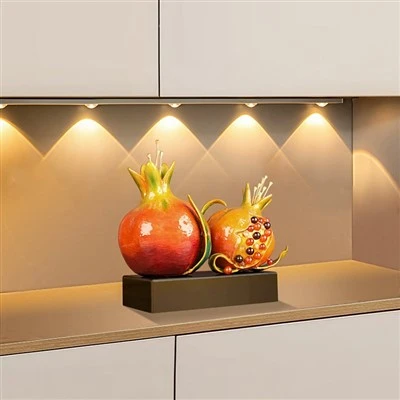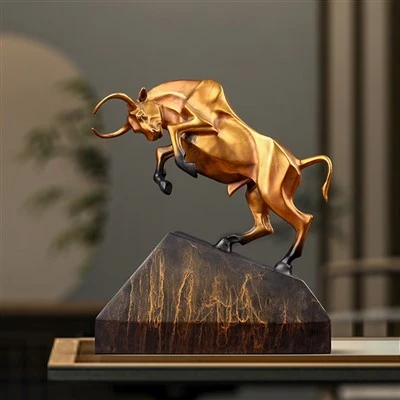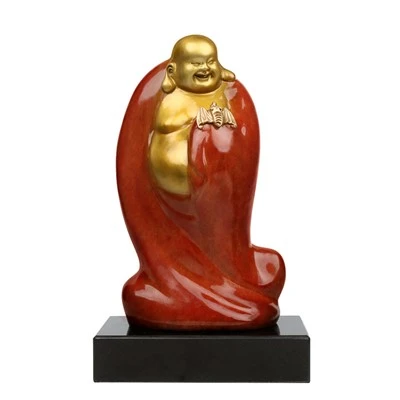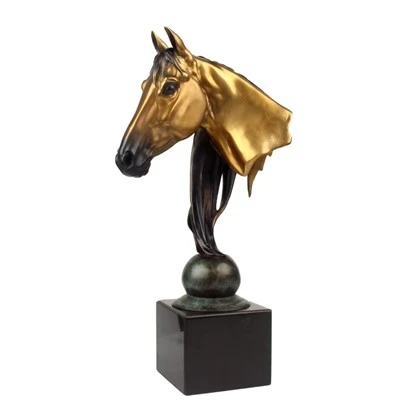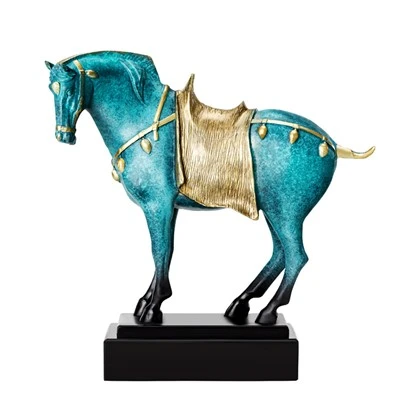
One of the most prominent technical features of bronze statues is the casting process. Production typically begins with creating a model based on the design, followed by the fabrication of a corresponding mold; molten bronze is then poured into the mold, forming the statue's basic shape upon cooling and solidification. Compared to direct metalworking, casting allows for the faithful reproduction of complex three-dimensional forms, enabling the effective rendering of details such as facial expressions, clothing folds, hair, and decorative patterns. For large-scale statues, various sections are cast separately before being assembled and welded together.
Once cast, bronze statues undergo finishing and surface treatment. Artisans grind and repair burrs, casting gates, and seams on the surface to refine the overall form, while areas lacking definition require further carving and processing. Surface treatment is another crucial stage, involving techniques such as grinding, polishing, coloring, and patination to alter the statue's color and texture. These methods can produce various effects-such as dark brown, verdigris, or black finishes-adding rich visual depth to the work.
Bronze statues are also characterized by their substantial weight, durability, and sense of history. Bronze is highly corrosion-resistant and, with proper treatment, can be preserved for centuries. Over time, a natural patina (oxide layer) forms on the surface, altering the color and texture-a unique aesthetic quality of bronze art. The integration of traditional casting methods with modern production techniques not only enhances precision but also allows bronze statues to exhibit a wider range of forms and artistic effects while retaining their traditional character.