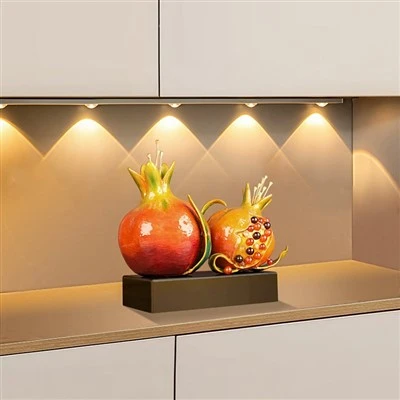
Technical requirements for gallery sculptures primarily concern their form and dimensions. Sculptures must be executed according to the design specifications, maintaining accurate overall proportions, shapes, and details, free from significant distortion, cracking, or defects. Furthermore, the height, width, and weight of the piece must be determined in relation to the gallery space to ensure a compelling visual impact without obstructing visitor flow or the display of other artworks.
Materials and fabrication techniques constitute another critical set of requirements. Sculptures may be crafted from bronze, stainless steel, stone, resin, or ceramics, with the specific choice depending on the desired artistic effect and the exhibition environment. Upon completion, the surface should be smooth with crisp details; joints-such as welds or seams-must be finished naturally, free from obvious burrs, cracks, or machining marks. Any surface coloring or coatings must be uniform and possess adequate resistance to wear and aging.
Structural safety is a paramount consideration for gallery sculptures. Large or heavy pieces require reliable internal support structures and secure base anchoring to prevent tipping, wobbling, or shifting. Modular or multi-part sculptures must feature robust, secure connections between components. For suspended sculptures or those with cantilevered elements, appropriate hardware must be selected based on weight and installation method, and load-bearing points must undergo safety inspections.
Gallery artworks must also meet standards for effective display and preservation. Materials must be compatible with indoor temperature, humidity, and lighting conditions, ensuring no significant discoloration, deformation, or corrosion occurs under normal display circumstances. Protective measures against impact and scratching are essential during transport and installation. Once installed, the sculpture's stability, surface quality, and visual presentation should be verified, and a maintenance log established to facilitate future cleaning, care, and routine inspections.