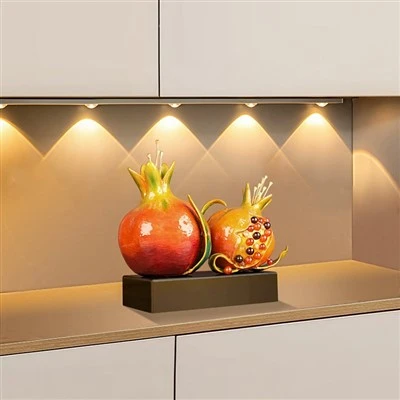
The artistic layout of landscape sculptures must first consider overall spatial relationships. A sculpture should not exist in isolation but rather form a harmonious whole with the garden's architecture, pathways, vegetation, water features, and rest areas. During the design process, the sculpture's location, orientation, and scale must be determined based on the site's size and spatial characteristics, ensuring the work serves as a visual focal point without disrupting the existing landscape layers.
Regarding layout strategies, various forms-such as central, nodal, axial, and dispersed arrangements-can be adopted depending on the function of the garden space. A central layout typically places the sculpture in the middle of a plaza or open area, highlighting its prominence. A nodal layout positions the sculpture at intersections, entrances, or transitional points in the landscape, guiding the visitor's line of sight and movement. An axial layout is suitable for gardens with distinct spatial axes, where the sculpture can reinforce the sense of spatial order.
The interplay between the sculpture and elements like vegetation and water features also influences the overall artistic effect. For instance, placing a sculpture near a lawn, flowerbed, or pool allows the colors of the plants and the reflections on the water surface to enrich the work's visual depth. Tall sculptures can create a contrast in height against low-growing plants, while smaller pieces can serve as accents amidst shrubs and flowers. Varying elements in terms of solidity versus void, density, and height helps enhance the rhythmic quality of the garden space.
Viewing angles and the interplay of light and shadow must also be considered. The optimal viewing angle should be determined based on the primary flow of pedestrian traffic, while also accounting for visual impact from varying distances. Natural light can be utilized during the day to reveal the sculpture's volume and texture, whereas artificial lighting at night can highlight its silhouette and key details. A well-conceived artistic layout allows the sculpture and the garden environment to complement one another, ensuring the work possesses independent aesthetic value while serving as an integral part of the landscape as a whole.